Astrology basics
Birth Chart Explained: Meaning and How to Read Yours
A birth chart is a map of the sky at the exact moment and place you were born. It plots where the Sun, Moon, and planets sat across the twelve zodiac signs and twelve houses. Astrologers read those positions as a language for personality, motivation, and timing, not as fixed fate.
What is a birth chart?
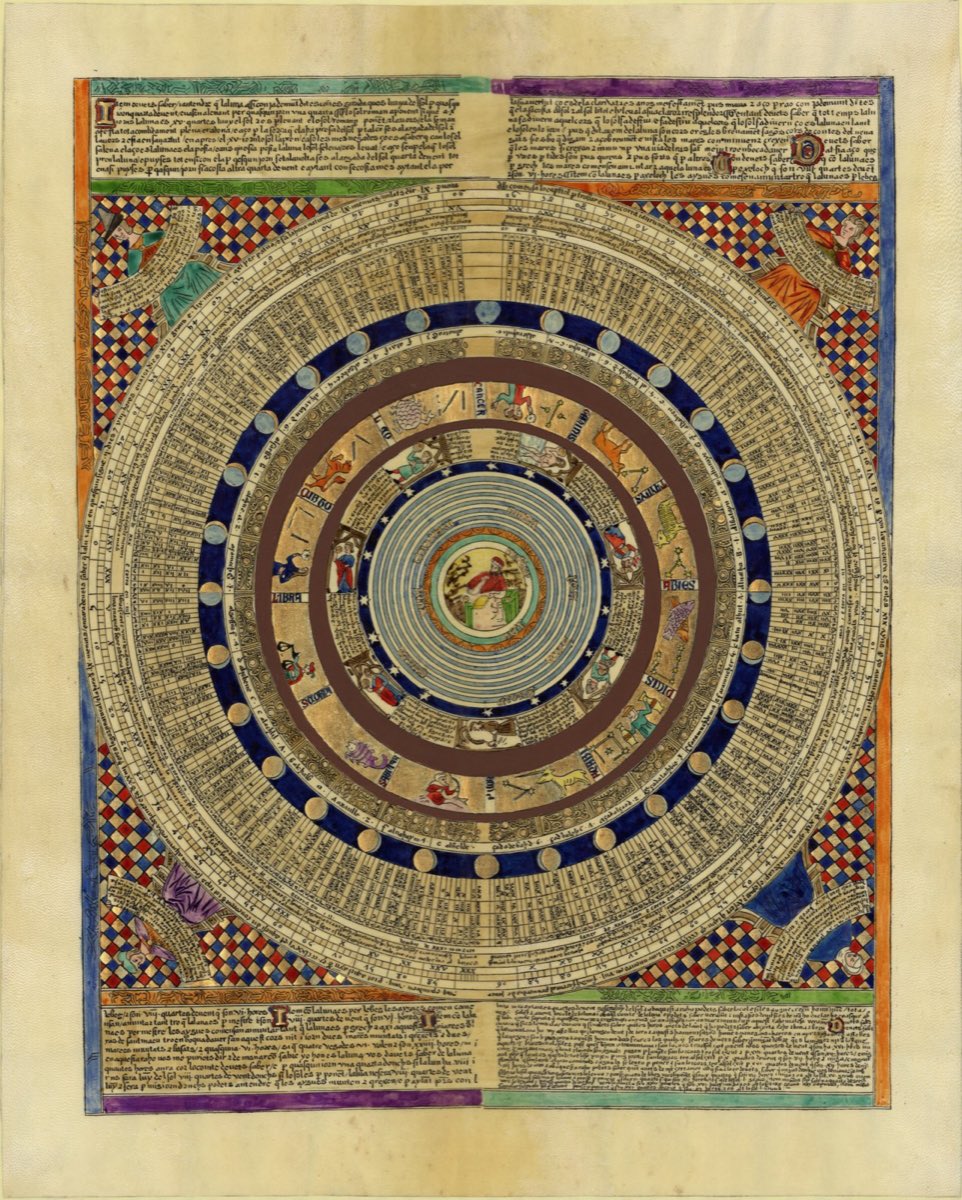
A birth chart, sometimes called a natal chart, is a snapshot of the sky taken from the spot on Earth where you were born, at the minute you arrived. Freeze that sky and you get a circular diagram showing where the Sun, the Moon, and the planets were sitting, and which slice of the zodiac each one occupied.
To build one you need three things: your date of birth, your exact time of birth, and your birthplace. Date alone gives you your Sun sign, the one most people already know. The time and place are what make the chart truly yours, because the sky shifts roughly one degree every four minutes. Two people born in the same city hours apart can have very different charts.
The circle itself represents the horizon and the path the Sun appears to travel. The planets are scattered around it like pins on a map. Where they land, and how they sit relative to each other, is the raw material an astrologer reads.
It helps to think of a birth chart as a personality language rather than a prediction machine. It does not say what will happen to you. It offers a set of symbols and patterns that you can use to think more clearly about how you operate, what you want, and where you tend to get stuck.
The three building blocks: planets, signs, and houses
Almost everything in a chart comes down to three layers stacked together. Get these and the rest falls into place.
The planets are the actors. Each one governs a slice of human experience. The Sun is your core identity and what energizes you. The Moon is your emotional life and what makes you feel safe. Mercury runs your thinking and communication. Venus rules love, taste, and what you value. Mars is drive, anger, and how you go after things. Jupiter governs growth, luck, and belief. Saturn is discipline, limits, and the hard lessons. The slower outer planets shape whole generations: Uranus brings disruption and originality, Neptune handles dreams and illusion, and Pluto deals with power and deep change.
The signs are the style. The twelve zodiac signs, from Aries to Pisces, describe the flavor a planet expresses itself in. Mars in steady Taurus pushes differently than Mars in restless Gemini. The sign answers how.
The houses are the setting. The chart is divided into twelve houses, each tied to an area of life such as money, relationships, career, or home. A planet's house answers where its energy shows up.
So a single placement reads as a sentence: this planet (actor), in this sign (style), in this house (setting). Venus in Leo in the tenth house is affection that wants to be seen, played out in your public and professional life.
How to read a birth chart, step by step
Reading a chart is less about memorizing a hundred meanings and more about working in a sensible order. Here is a sequence that keeps you from drowning.
Start with the Sun, Moon, and rising sign together. These three anchor the whole reading and tell you the most about a person before you look at anything else.
Next, find the four angles. The chart has a top, bottom, left, and right edge that mark the most charged points: the rising sign on the left, its opposite point on the right, the highest point overhead linked to career and reputation, and the lowest point at the base linked to home and roots. Planets sitting near these angles get amplified.
Then go planet by planet. For each one, note its sign and its house, and turn that into a plain sentence. Do not interpret in isolation yet. Just collect the raw placements.
After that, look at the aspects, the angles planets make to one another, which we cover below. These show where energies cooperate or clash.
Finally, step back and look for themes. Is one sign or house crowded with planets? Does one planet keep showing up in important spots? Charts repeat themselves. The same message often arrives three or four different ways, and those repetitions are what you trust.
Resist the urge to read every detail at once. A first pass that nails the big patterns beats a tangle of contradictory fragments.
Your big three: where every beginner should start
If you only ever learn three things in your chart, make them your Sun, Moon, and rising sign. Together they sketch a surprisingly full portrait, and they are the part of astrology most people quote when they describe themselves.
Your Sun sign is your core self, the part that says what fundamentally drives you and where you feel most alive. It is the answer to the question most people already know: what sign are you? But it is only one third of the picture.
Your Moon sign describes your inner emotional world, the private self you might only show to people you trust. It governs what you need to feel secure and how you process feelings. Two people with the same Sun can react to stress in completely opposite ways because their Moons differ.
Your rising sign, also called the ascendant, is the sign that was climbing over the horizon at your birth. It shapes your first impression, your instincts, and the lens you look at the world through. This is the one placement you cannot get without an accurate birth time, which is why time matters so much.
Think of it this way. The Sun is who you are at the center, the Moon is how you feel underneath, and the rising is how you meet the world. When these three pull in different directions, that tension is often the most honest thing the chart has to say about you.
Aspects: how the planets talk to each other
Planets do not act alone. Aspects are the geometric angles between them, measured in degrees around the circle, and they describe whether two energies get along or grind against each other. They are the verbs of the chart.
The major aspects come from dividing the circle into simple fractions. A conjunction is two planets sitting close together, fusing their energies so they act as one, for better or worse. A sextile, about sixty degrees apart, is an easy, supportive link that offers opportunity if you use it. A square, ninety degrees, is friction: two planets pulling in directions that demand effort to reconcile, and often the source of your most productive struggles. A trine, one hundred twenty degrees, is smooth and natural, a talent that comes so easily you may not notice it. An opposition, a hundred eighty degrees, sets two planets across the table from each other, creating a push and pull you have to balance.
Aspects matter because they explain internal contradictions. A confident Sun squared by a cautious Saturn can look like someone who is bold and self-doubting at once, and that is real, not a glitch.
You do not need every aspect on day one. Focus on the tight ones, where the angle is nearly exact, and on aspects involving the Sun, Moon, and rising. Those carry the most weight. The looser and more obscure the aspect, the quieter its voice in the overall reading.
What your chart actually says about you
Once you have collected the placements, the next question is what they mean for you specifically. The trick is to read a chart as a set of tendencies, not labels. A placement describes a pull you feel, a default setting you can lean into or push against, never a sentence you are stuck with.
Start with where your planets cluster. If several land in one sign or one house, that area of life carries extra weight, and you will probably notice it as a recurring theme: the same kind of relationship, the same money pattern, the same itch to create. A planet sitting right on an angle, near the rising sign or the career point overhead, tends to feel loud and obvious to other people, almost like a headline.
Tension in a chart is not a flaw. A square between two planets often points to the exact place you grow the most, because the friction forces you to develop both sides. The placement that bothers you is usually the one worth sitting with. Read the chart as a description of your raw material, then notice how much of it you recognise and how much you have already reshaped through your own choices.
A worked example: putting it together
Say someone has the Sun in Capricorn in the tenth house, the Moon in Cancer in the fourth, and Libra rising. Reading it in order turns a pile of symbols into a coherent picture.
The Sun in Capricorn in the tenth house is ambition aimed straight at career and public standing: a person who measures themselves by what they build and achieve. The Moon in Cancer in the fourth house is the opposite need, a deep pull toward home, family, and emotional safety. Right away you can see the central tension: the drive to be out in the world versus the need to retreat and be cared for. The Libra rising softens the edges, giving a diplomatic, people-pleasing first impression that may hide how driven they actually are.
Notice what you did. You did not predict anything. You named a pattern, found the friction inside it, and turned it into a question this person can recognise: how do I honour my ambition without starving my need for home? That is the practical payoff. Take your own three placements, write them as plain sentences, and look for the same kind of pull. The contradictions are where the real self-knowledge starts.
What a birth chart can and cannot tell you
Here is the honest part, the bit a lot of astrology content skips. A birth chart is a tool for self-reflection, not a crystal ball, and treating it as either everything or nothing misses what it actually does.
What it can do is give you language. It hands you a structured vocabulary for traits, tensions, and motivations that are otherwise hard to name. It can prompt useful questions. Why do I keep recreating the same conflict? Where do I sell myself short? A chart will not answer those, but it points at the rooms where the answers tend to live. Plenty of people find that valuable purely as a mirror, a way to think about themselves from a slightly different angle.
What it cannot do is predict specific events, name the person you will marry, or hand you a fixed destiny. There is no good scientific evidence that the positions of the planets cause personality or determine outcomes. Astrology is a symbolic system, not a physical mechanism, and the more precisely someone claims to forecast your future from it, the more skeptical you should be.
The healthiest way to use a chart is loosely. Take what rings true, test it against your actual life, and leave the rest. It works best as a starting point for reflection, a shared language with friends, and a prompt for curiosity about yourself, not as a set of instructions to obey.
You now understand birth chart in general. What it does not tell you is where it actually falls in your own chart, which needs your birth time and place. A free reading places it for you.
FAQ
Do I need my exact birth time to read my chart?
For the full picture, yes. Your date alone gives your Sun sign and rough planet positions. But your rising sign and your houses depend on the exact minute, since the sky shifts about one degree every four minutes. Without a birth time you can still read a partial chart, just not the angles or houses reliably.
What if I don't know my birth time?
Check your birth certificate first, or ask a parent or the hospital. If it is truly lost, you can still work with a chart set for noon, which keeps the planets and signs accurate while leaving the rising sign and houses uncertain. Some astrologers also offer rectification, estimating the time from known life events.
Why doesn't my Sun sign feel like me?
Because your Sun is only one third of the story. Your Moon and rising sign often shape how you come across day to day, and a crowded house or a strong aspect can pull you in another direction entirely. If your Sun sign feels off, your chart's other placements usually explain why.
Is reading a birth chart the same as fortune-telling?
No. Fortune-telling claims to predict specific future events. Reading a birth chart is closer to using a personality framework: it describes patterns, motivations, and tensions you can reflect on. There is no scientific evidence it forecasts outcomes, so treat it as a mirror for self-understanding rather than a forecast you must obey.
How long does it take to learn to read a chart?
You can grasp the basics in an afternoon: find your Sun, Moon, and rising, then read each planet by its sign and house. Getting fluent with aspects and themes takes longer, usually weeks of practice on real charts. Start small, read one placement at a time, and let the patterns build.
Read your own chart in minutes
You just learned what birth chart means in general. See where it falls in your own chart, free. Pick what you want clarity on, then add your birth details.
Get your free reading