
Astrology basics
Astrology Houses: The 12 Houses Meaning Explained
The 12 houses are the chart's stage directions. If planets are the actors and signs are how they act, the houses are where the action lands: your money, your friendships, your career, your home. Each house covers one slice of life, and the planets sitting in it color how that slice tends to play out for you.
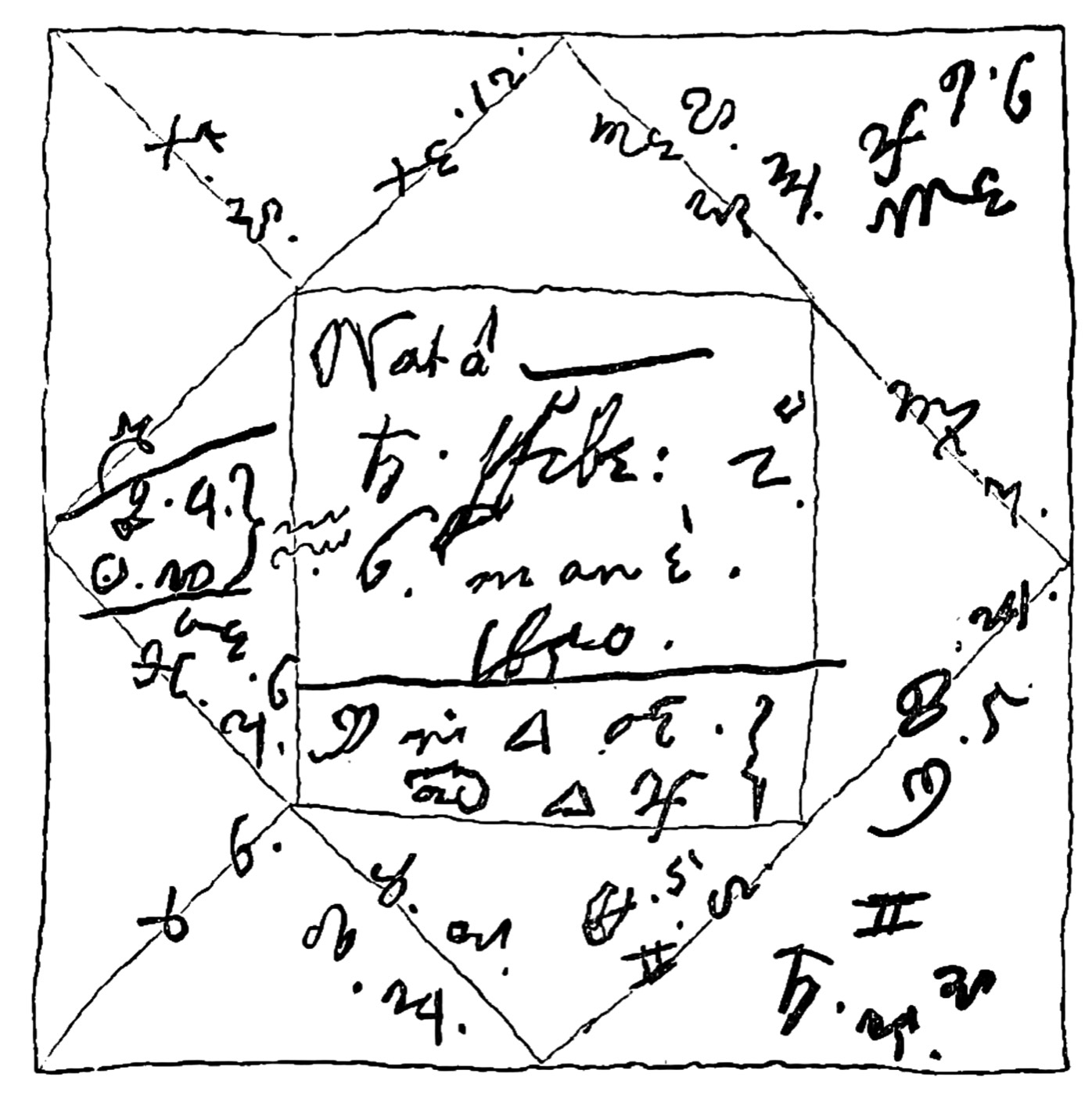
What are the astrological houses?
A birth chart is a snapshot of the sky at the moment you were born, drawn as a circle. Astrology divides that circle into twelve wedges, and those wedges are the houses. The signs tell you the flavor of a planet's energy. The houses tell you the address. Mars in Aries is a particular kind of drive; Mars in the tenth house tells you that drive shows up most in your work and public reputation.
The dividing line for the houses is not the zodiac. It is the horizon and the spin of the Earth. The whole zodiac wheels past the horizon once every twenty-four hours, which is why the time of day you were born matters so much. Two people born on the same date but six hours apart can have completely different house setups, even with identical planet positions by sign.
Each house owns a domain. The first is about you and your body. The seventh, sitting directly across, is about other people and partnership. As you move around the wheel, the focus widens from self to the world. Reading the houses is mostly a matter of asking a simple question: which part of life does this planet keep showing up in? That is what the houses answer, and it is why they make a chart feel personal rather than generic.
The 12 houses, one by one
Here is the whole wheel, kept tight. The first house is identity, your appearance, and the way you come across before you say a word. The second house covers money, possessions, and what you value, including self-worth. The third house is communication, learning, siblings, and short trips. The fourth house is home, family, roots, and your private inner base.
The fifth house is play: creativity, romance, pleasure, and children. The sixth house is the daily grind, work habits, health routines, and service. The seventh house is one-to-one partnership, marriage, business partners, and open rivals. The eighth house is the heavy stuff: shared resources, intimacy, debt, death, and deep change.
The ninth house is the big picture, travel, higher education, philosophy, and belief. The tenth house is career, public role, ambition, and reputation. The eleventh house is friendship, networks, groups, and long-term hopes. The twelfth house is the hidden interior: the unconscious, solitude, rest, and what you keep behind closed doors.
A clean way to remember the arc: the first six houses are mostly personal, about building your own life. The second six turn outward, about how you meet the wider world and other people. You do not have to memorize all twelve. Most readings come back to two or three houses where a lot of planets cluster, and those are the areas of life that get the most pressure and attention in your chart.
Angular, succedent, and cadent houses
The twelve houses come in three groups of four, and the grouping tells you something about how forcefully a house operates. This is one of the older ideas in astrology, and it still holds up as a rule of thumb.
The angular houses are the first, fourth, seventh, and tenth. They sit on the four corners of the chart, the points tied to sunrise, sunset, the top of the sky, and the bottom. These are the action houses. A planet here tends to be loud and obvious in your life. The angular houses line up with identity, home, partnership, and career, which is not a coincidence; those are the load-bearing parts of a life.
The succedent houses are the second, fifth, eighth, and eleventh. They follow the angular houses and deal with what you build and hold onto: money, creativity, shared resources, and community. The energy here is steadier and more about maintenance than launch.
The cadent houses are the third, sixth, ninth, and twelfth. They come last in each set and lean toward thinking, adjusting, and processing: communication, daily routines, beliefs, and the inner world. Planets here often work quietly, in the background of your mind. None of these groups is better than the others. They simply describe whether a part of your life tends to push outward, hold steady, or turn inward.
Empty houses are not a problem
Most charts have empty houses, and a lot of them. You have ten major planets and points but twelve houses, so by simple math some houses will have no planet in them. This is normal and it does not mean that area of your life is broken, missing, or doomed to be empty.
An empty house just means there is no planet sitting there to draw extra attention. The house is still active. You still have a career, friendships, and a home even if those houses are quiet. To read an empty house, look at the sign on its cusp, then find the planet that rules that sign and see where it lives in your chart. If your tenth house is empty but its ruling planet sits in the third house, your career story may be tied up with communication, writing, or local connections.
This matters because people sometimes panic when they see a blank seventh house and assume it predicts a lonely life. It does not. Astrology is a language for reflection, not a verdict. An empty house often runs smoothly precisely because there is no planetary tension pulling on it. The houses packed with planets are the ones that tend to feel charged, complicated, and central to your story. The quiet ones usually just get on with it.
How the houses show up in your chart
A house comes to life through whatever sits in it. Start with the sign on the cusp, the line that opens the house. That sign sets the tone for how you approach that area of life. A second house with Capricorn on the cusp suggests a cautious, long-game relationship with money; the same house with Aries suggests a fast, impulsive one.
Next, look for planets inside the house. A planet there acts like a spotlight, pulling extra energy and attention into that domain. Venus in the fifth house leans into romance and creative pleasure. Saturn in the tenth often shows up as a serious, slow-building career with real staying power. The more planets crowded into one house, the more that part of life tends to dominate your story.
Then trace the ruler. Every house cusp has a sign, and that sign has a ruling planet sitting somewhere else in the chart. Where that ruler lands quietly links the two houses together. Read in that order, sign then planets then ruler, and a house stops being a label and starts describing how a real part of your life actually behaves.
A worked example: reading the tenth house
Say your tenth house, the house of career and public role, has Libra on the cusp and the Moon sitting inside it. Walk through it in three steps and the reading writes itself.
The cusp sign, Libra, colors how you approach work: you may want fairness, collaboration, and a pleasant environment, and you might lean toward fields tied to design, partnership, law, or relationships. The Moon inside the house adds a strong emotional pull toward your public role, so how you are seen at work can deeply affect your mood. You may need a career that feels nurturing rather than purely transactional. Finally, Venus rules Libra, so you find Venus elsewhere in the chart; if it sits in your second house, your reputation and your earning power are closely tied together.
None of this predicts a fixed outcome. It is a prompt for reflection. The point is to notice a real pattern, that being well regarded and feeling emotionally settled at work matter a lot to you, and then decide what to do with that awareness yourself.
How to find your house placements
To get your houses you need three things: your birth date, your birth time, and your birth location. The time is the non-negotiable one. Because the houses are set by the rotation of the Earth, even a guess that is off by an hour can shift planets into different houses and change the reading. If you do not know your exact time, your birth certificate or a parent is the most reliable source.
Once you have those details, any free chart calculator or app will draw the wheel and slot your planets into houses for you. You do not have to do the math by hand. What you do have to choose, in some tools, is a house system. There are several methods for cutting the circle into twelve, and Placidus is the most common default in astrology. Whole Sign is another popular option that keeps things simple. For a beginner, the default is fine; the differences mostly matter for planets near a house boundary.
When you read your chart, start by finding where the Sun, Moon, and any planet clusters land. Those houses point to the life areas with the most weight. Treat what you find as a prompt for self-reflection rather than a fixed forecast. Astrology can describe tendencies and themes you already half-recognize. It cannot tell you what will happen, and it works best when you hold it loosely and use it to ask better questions about yourself.
You now understand astrology houses in general. What it does not tell you is where it actually falls in your own chart, which needs your birth time and place. A free reading places it for you.
FAQ
Do I need my exact birth time for the houses?
Yes, more than for anything else in your chart. The houses are set by the Earth's rotation, so they shift roughly every two hours. An incorrect time can move planets into the wrong houses entirely. Your signs stay mostly the same, but your house placements depend on getting the time right.
What does it mean if a house is empty?
Nothing bad. With ten planets and twelve houses, empty houses are expected. The area of life still functions normally; there is just no planet there drawing extra focus. To read it, look at the sign on the cusp and find where that sign's ruling planet sits in your chart.
Which house is the most important?
No single house wins, but the angular houses tend to be loudest: the first, fourth, seventh, and tenth, covering identity, home, partnership, and career. In your own chart, the most important houses are usually the ones where several planets cluster, since that is where the chart concentrates its energy.
What is the difference between signs and houses?
Signs describe the style or flavor of an energy. Houses describe the area of life where it plays out. A planet's sign tells you how it acts; its house tells you where. Both are read together, which is why the same planet means different things in different charts.
Which house system should I use?
For a beginner, the default in your chart tool is fine. Placidus is the most common in astrology, and Whole Sign is a simpler alternative. The systems mostly differ for planets sitting close to a house boundary. Pick one and stay consistent rather than switching back and forth.
Read your own chart in minutes
You just learned what astrology houses means in general. See where it falls in your own chart, free. Pick what you want clarity on, then add your birth details.
Get your free reading