Why Astrology Is Having a Psychology Moment
Why astrology is having a psychology moment: how the cancer zodiac sign mental health connection and attachment theory explain its surprising staying power.
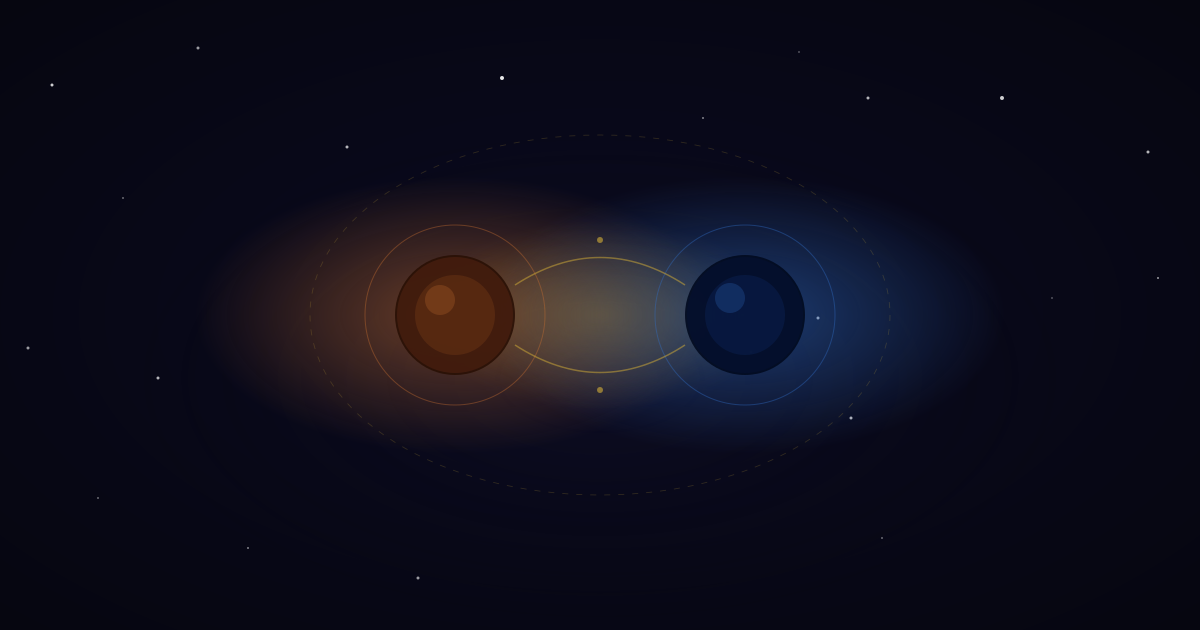
You might be surprised to learn that the cancer zodiac sign mental health connection is more than just folklore; it's a fascinating area where ancient wisdom meets modern psychological understanding. We’re seeing a real resurgence in how people connect astrological archetypes to their own internal landscapes, and it’s not as mystical as you might think.
The Watery Depths of Cancer: Nurturing and Guarded
Cancer, the cardinal water sign ruled by the Moon, is often characterized by its deep emotional sensitivity and nurturing instincts. You might recognize this in yourself or others as a profound need for security, a strong connection to home and family, and an almost intuitive understanding of others' feelings. This isn't just about being "moody"; it's about a fundamental drive to create a safe emotional harbor, both for yourself and for those you care about. The Crab’s protective shell is a potent symbol of this duality: an outward toughness that guards an incredibly soft and vulnerable interior. When you feel threatened or insecure, your natural inclination is to retreat and build up your defenses, much like the Crab pulls into its shell. This can manifest as a tendency towards emotional hoarding or a reluctance to share your deepest feelings until trust is firmly established. Understanding this core drive is key to navigating the complexities of your emotional world.
Emotional Security and Attachment Styles
The way you seek and maintain emotional security is deeply influenced by early life experiences, a concept well-explored in attachment theory by researchers like Mary Ainsworth and John Bowlby. For Cancer individuals, particularly those with a strong emphasis on this sign in their birth chart, there’s often a pronounced need for consistent, reliable emotional connection. If your early caregivers were consistently responsive to your needs, you likely developed a secure attachment style. This means you feel comfortable with intimacy and interdependence, able to express your needs openly and trust that they will be met. However, if your early experiences involved inconsistent availability or responsiveness, you might develop an anxious-preoccupied attachment style. This can lead to a constant craving for reassurance, a fear of abandonment, and a tendency to become overly dependent on others for emotional validation, mirroring the Cancerian desire for a secure base but with an undercurrent of anxiety. Conversely, a dismissive-avoidant attachment style might manifest as a strong outward independence that masks a deeper discomfort with emotional closeness, a defense mechanism to protect against potential hurt or rejection, which can also be seen as a form of self-protection for the sensitive Cancerian. Understanding your attachment style can illuminate why you seek emotional security in certain ways and how that aligns with your astrological blueprint.
The Cancerian Persona: The Caregiver and the Shielded Heart
The archetype of the caregiver is powerfully embodied by the Cancer zodiac sign. You likely possess an innate capacity for empathy and a deep-seated desire to protect and nurture others. This makes you an incredibly supportive friend, partner, and family member. However, this strong outward focus on caring for others can sometimes lead to neglecting your own emotional needs. It’s as if you’re so busy tending to the garden of everyone else’s well-being that your own inner landscape can become overgrown or neglected. This is where the concept of the persona, as described by Carl Jung, becomes relevant. Your persona is the mask you present to the world, and for Cancer, it’s often that of the compassionate nurturer. The challenge arises when this persona becomes so ingrained that it prevents you from showing your own vulnerabilities. The shadow self, the repressed aspects of your personality, might contain unmet needs or unexpressed hurts that you shield from view. Learning to integrate your shadow, to acknowledge and express your own vulnerabilities without feeling like you're jeopardizing your ability to care for others, is a crucial step in your personal growth journey. This isn't about abandoning the caregiver role, but about expanding your capacity to care for yourself with the same tenderness you offer others.
Navigating Emotional Boundaries and Self-Care
One of the most significant challenges for individuals with strong Cancerian placements often revolves around establishing and maintaining healthy emotional boundaries. Your inherent empathy can sometimes lead you to absorb the emotions of others, feeling their pain as if it were your own. This can be incredibly draining and lead to burnout if not managed consciously. Think of your emotional boundaries like the shoreline; they are there to define where you end and others begin, allowing the tides of emotion to flow without eroding your own foundations. Without clear boundaries, you might find yourself saying "yes" when you mean "no," taking on responsibilities that aren't yours, or feeling resentful because your own needs are consistently unmet. This is where the concept of self-care becomes not a luxury, but a necessity. For you, self-care might involve setting aside dedicated time for quiet reflection, engaging in activities that replenish your emotional reserves, or simply learning to say "no" without guilt. It’s about recognizing that you cannot pour from an empty cup, and that tending to your own emotional well-being is essential for you to continue offering your unique brand of nurturing support to the world. This practice of boundary setting and self-compassion is a vital component of maintaining your cancer zodiac sign mental health.
The Big Five and Cancerian Traits: An Empirical Lens
"High Agreeableness and high Neuroticism together don't cancel each other out — they create someone who feels deeply and cares deeply, often at the same time."
When we look at personality through the lens of the Big Five personality traits – Openness, Conscientiousness, Extraversion, Agreeableness, and Neuroticism – we can find interesting correlations with astrological archetypes. For individuals with a strong Cancerian influence, we often see high levels of Agreeableness. This aligns with their natural inclination towards empathy, cooperation, and a desire to maintain harmonious relationships. They tend to be warm, compassionate, and concerned with the well-being of others, which are hallmarks of high Agreeableness. Simultaneously, Cancerians often exhibit traits associated with higher Neuroticism. This isn't necessarily a negative trait; rather, it points to a heightened emotional sensitivity, a tendency to experience a wider range of emotions, and a greater awareness of subtle emotional shifts in themselves and others. This sensitivity can fuel their empathy but also contribute to anxieties and a need for emotional security. The desire for home and security can also be linked to a higher degree of Conscientiousness, particularly in areas related to creating a stable and nurturing environment. While not always outgoing, their inner emotional world is rich, suggesting a complex interplay that the Big Five framework can help to map. This empirical approach offers a bridge, allowing us to see how deeply felt astrological tendencies can be observed and understood through the structured language of modern psychology.
Embracing Your Inner Compass: Practical Steps for Well-being
Understanding your cancer zodiac sign mental health isn't just about recognizing patterns; it's about empowering yourself to live a more balanced and fulfilling life. For those with a strong Cancerian energy, this means consciously cultivating self-awareness and implementing practical strategies. Start by journaling your emotional experiences. What triggers your need for security? When do you feel most vulnerable? This practice can help you identify patterns and gain clarity. Next, focus on building your internal sense of safety. This might involve creating comforting routines, spending time in nature, or engaging in creative pursuits that allow for emotional expression. Don't underestimate the power of physical comfort – creating a cozy home environment can be incredibly grounding. When it comes to relationships, practice assertive communication. Learn to express your needs clearly and respectfully, and don't be afraid to set boundaries. Remember, protecting your energy is not selfish; it's essential for your well-being. Finally, consider exploring your personal birth chart with a professional. Understanding the specific placements and aspects in your chart can offer profound insights into your unique emotional landscape and provide personalized guidance for navigating your path. You can begin this journey by generating your birth chart reading.
Q: How does the Moon's influence affect Cancer's emotional nature? A: As the ruler of Cancer, the Moon governs emotions, intuition, and subconscious patterns. This makes Cancerians highly sensitive to their inner feelings and the emotional atmosphere around them, leading to a deep connection with their moods and a strong need for emotional security.
Q: Can Cancerians be overly protective to their own detriment? A: Yes, the strong nurturing instinct of Cancer can sometimes lead to over-protectiveness, not only of others but also of themselves by becoming too insular. This can manifest as resistance to change or a reluctance to face challenging emotions directly, creating a self-imposed shell.
Q: What are common psychological challenges faced by Cancer individuals? A: Common challenges include managing intense emotions, overcoming a fear of vulnerability or abandonment, establishing healthy boundaries, and avoiding the tendency to internalize others' problems, which can lead to emotional exhaustion.
Q: How can Cancerians improve their emotional resilience? A: Improving emotional resilience involves practicing self-compassion, developing mindful awareness of their feelings without judgment, establishing consistent self-care routines, and learning to express their needs assertively in relationships.
Q: Is there a connection between Cancer's nurturing nature and burnout? A: Absolutely. The inherent desire to nurture can lead Cancer individuals to prioritize others' needs above their own, often leading to emotional and physical burnout if they don't actively practice self-care and boundary setting.
Ready to explore the depths of your own emotional blueprint? Discover how your birth energy shapes your personality and well-being by getting your free birth chart reading today.
Arpit Tripathi
Founder, Destivio · ex-Google · ex-AWS
Arpit built Destivio to bring the depth of Vedic astrology into the age of AI — making precise, personalized birth chart readings accessible to everyone.
LinkedIn →Continue reading
Psychology of Believing in Astrology: The Research
The psychology of believing in astrology: the Barnum Effect, confirmation bias, and what the canc…
Read →
Rising Sign Personality: Your Jungian Social Mask
Cancer rising sign personality and beyond: how your rising sign becomes a Jungian social mask tha…
Read →Explore your chart
Curious what your birth chart reveals about you?
Get a personalized reading based on your birth energy — free to start.
Discover your birth energy →