Your Big Three, Decoded
Big three astrology meaning goes beyond a glossary. Learn to read the tension between your sun, moon, and rising as a relationship, not a list.
Here is a question most "big three" explainers never actually answer: if your sun, moon, and rising are all describing the same person, why do they so often seem to contradict each other? Why does someone read as a bold, take-charge Aries and then privately need more reassurance than anyone around them suspects? Why does the friend everyone calls "so calm and put-together" describe their inner life as a low hum of restlessness?
The flat-glossary version of the big three tells you that the sun is your core, the moon is your emotions, and the rising is your first impression, then stops. That is the boring part. The interesting part, the part that actually explains how a person moves through the world, lives in the gaps between the three. This article will teach you to read those gaps. The general patterns belong to anyone who shares your placements. The specific friction, the one that is genuinely yours, is something only your exact chart can show you, and we will get to why that distinction matters.
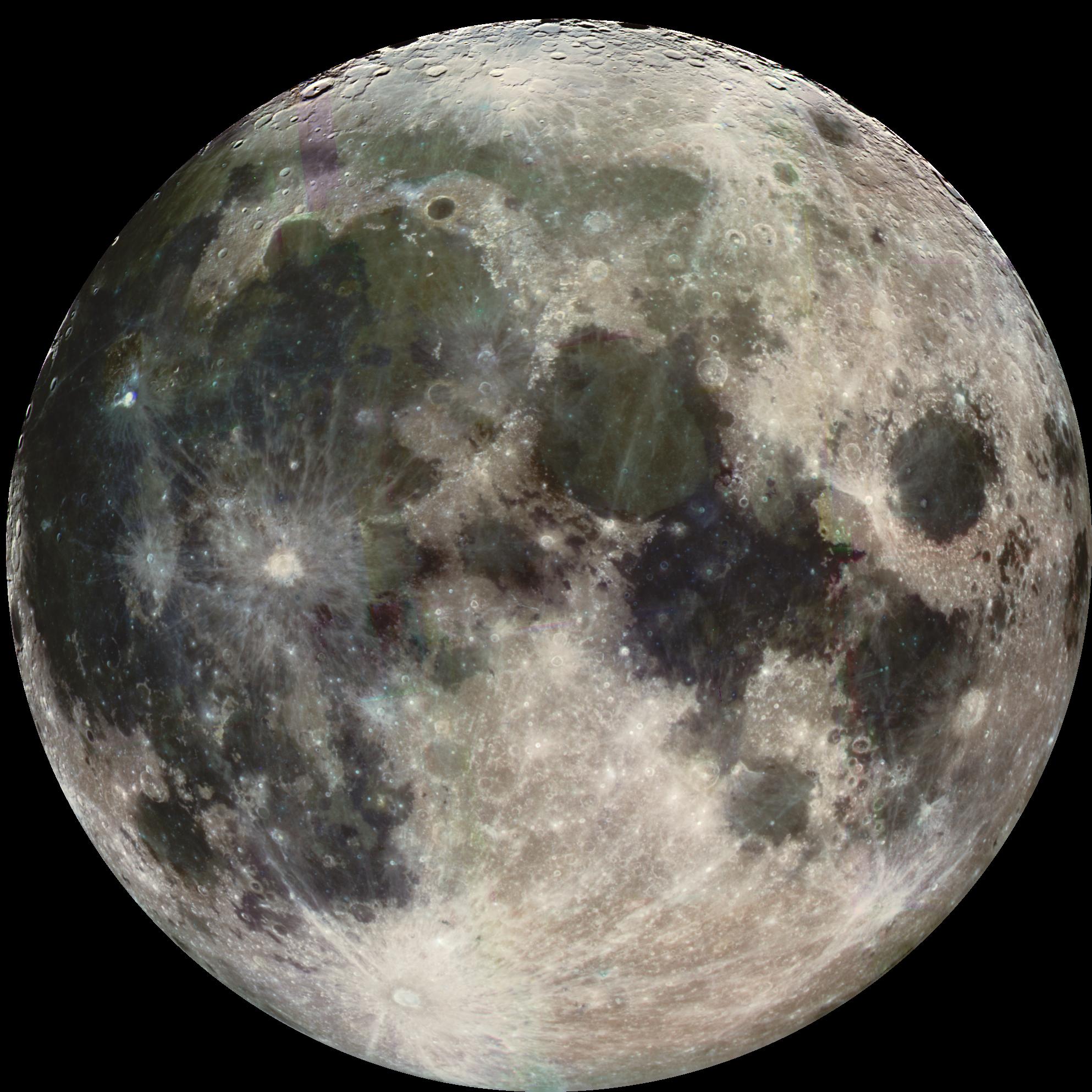 The full Moon photographed by NASA's Galileo spacecraft. Public domain (NASA/JPL/USGS).
What the big three actually are
In astrology, your "big three" are the three placements that shape the broadest strokes of your personality: your sun sign, your moon sign, and your rising sign (also called the ascendant). Most people only know their sun sign, because that is the one a magazine horoscope is built on. It is the sign the sun was passing through on the day you were born.
But the sun is one of three. A fuller sketch needs all three, and a useful way to hold them comes loosely from depth psychology rather than from any horoscope column:
- Sun = the conscious self, what you are growing toward. Your sense of "I am," your core motivation, the qualities you develop and express most deliberately over a lifetime. It is less a fixed label and more a direction.
- Moon = the inner emotional self, what you need to feel safe. Your instinctive reactions, your private comfort patterns, what soothes you and what unsettles you before you have time to think. The moon is the part of you that was running the show as a small child and still runs it when you are tired or stressed.
- Rising = the social mask, the first impression. The ascendant is the sign that was rising on the eastern horizon at the exact moment and place of your birth. It tends to describe how you come across, your default approach to new situations, the "front door" people meet first.
Read as a list, the big three is trivia. Read as a relationship, it becomes a small map of how a person's outer life and inner life negotiate with each other.
If you want the longer foundational walkthrough of each piece, Destivio has a dedicated big three explainer. What follows is the part that explainer can only gesture at: how the three talk to each other.
The big three is a conversation, not three labels
Think of the three as three people who share a house.
The rising answers the door. It decides what tone the household presents to a stranger. The sun is the person whose long-term goals shape where the household is headed, what it is building toward, what it is proud of. The moon is the one who never appears at the door at all but quietly determines whether everyone inside actually feels at home.
When all three "agree," life tends to feel coherent from the outside and the inside at once. A fire sun with a fire rising and a fire moon, for instance, is often experienced by others exactly the way it experiences itself: direct, warm, quick to act. There is little translation loss between the inner state and the outer signal.
The far more common, and far more interesting, situation is partial disagreement. That is where the texture of a personality lives.
A fire sun with a water moon
Consider someone with an Aries or Leo sun and a Cancer or Pisces moon. The sun wants momentum, visibility, a clear win. It is built to charge forward. The moon, in a water sign, needs emotional safety, depth, and time to feel its way through things before acting.
Astrological tradition often associates this combination with a particular inner experience: a person who looks confident and decisive on the outside while privately needing far more reassurance, rest, and emotional processing than that outer image suggests. The drive and the need are not in sync. Neither one is wrong. The work, symbolically speaking, is learning to let the moon's needs inform the sun's pace instead of overriding them, so the boldness does not run on empty.
An air rising over an earth sun
Or take someone with a Gemini or Libra rising and a Taurus or Capricorn sun. The rising is breezy, conversational, socially fluid, the first impression of someone light and easy to talk to. The sun underneath is steady, deliberate, and far more serious about commitment and long-term substance than the first impression implies.
People often meet the rising and are later surprised by the sun. "I thought you were the casual one" is the kind of thing this person hears once others get past the front door. The gap is not a contradiction to fix. It is a feature: the air rising makes the earth sun approachable, and the earth sun gives the air rising something solid to stand on.
How to read your own three as a relationship
You can do this exercise with just your three signs and their elements. Here is a method that gets you most of the value.
Step one: name the element and mode of each. Fire, earth, air, or water for the element. Cardinal (initiating), fixed (stabilizing), or mutable (adapting) for the mode. You now have three quick character sketches instead of three words.
Step two: ask where two of them pull in different directions. A water moon under a fire sun pulls between safety and momentum. An air rising over an earth sun pulls between lightness and weight. Find your strongest pull. That pull is often where your private friction lives, the place where what you show and what you need are not the same thing.
Step three: ask which one is "driving" right now. Under stress, most people fall back to the moon, the oldest and most instinctive layer. On a first date or a job interview, the rising usually takes the wheel. In the long arc of building a life you are proud of, the sun is the steering. Noticing which layer is active in a given moment is, quietly, one of the more genuinely useful things astrology can hand you: a vocabulary for catching yourself in the act.
Step four: look for the bridge. When two placements share an element or a mode, they cooperate easily. When they share nothing, they need a conscious translator. The translator is usually the third placement. A fiery sun and a watery moon, for example, can be mediated by an earth or air rising that gives the whole system a steadier or more communicative interface.
This is not prediction. Nothing here says what you will do. It is a structured way of noticing patterns you might already half-sense, which is most of what self-reflection tools are good for in the first place.
The honest part: why your sun sign feels so accurate (and why that is a trap)
Here is something worth being candid about. If a sun-sign horoscope or a generic "Leo personality" description has ever felt eerily accurate, that feeling is real, but the reason is not what it seems.
In 1948, psychologist Bertram Forer gave his students what they believed was a personalized personality assessment. In reality, everyone received the identical text, assembled from statements in a newsstand astrology book. Students rated its accuracy, on average, around 4.3 out of 5. The description fit almost everyone because it was written to fit almost everyone. This is now called the Forer effect, or the Barnum effect: vague, broadly flattering statements feel personal because we supply the specifics ourselves.
Sun-sign content works the same way. It has to. It is one sign's worth of writing aimed at roughly one twelfth of all humans alive. The parts that feel like they were written about you are usually the parts general enough to be written about anyone.
The Barnum effect is not a reason astrology is worthless. It is a reason to be precise. The cure for "this is vague enough to fit everyone" is detail that could only fit you.
And that is exactly where the big three changes the math. Your sun sign is shared by hundreds of millions of people. Your sun and moon and rising, in their specific combination, is shared by far, far fewer. Layer in the houses those planets fall in and the angles between them, all computed from your exact birth time and place, and you arrive at something that genuinely is not a one-size-fits-all description anymore.
Why your rising sign is the precision test
Notice the phrase "exact birth time" sitting underneath the big three. Your sun sign only needs your birth date. Your moon sign needs the date and a rough time, because the moon changes signs every two and a half days or so. Your rising sign needs your real birth time, often down to the hour, because the ascendant moves through the entire zodiac in about twenty-four hours, shifting roughly every two hours.
That is why two people born on the same day can read so differently. Same sun, possibly the same moon, but a different sign rising because they were born hours apart. The rising sign is, in a sense, the part of the big three that proves the chart is actually yours and not a calendar's. If you are fuzzy on what the ascendant is doing, Destivio's piece on how your rising sign acts as a social mask reads it through the same psychological lens used here, and the rising sign explainer covers the mechanics.
This is also the natural limit of an article. An article can tell you what big-three combinations tend to feel like in general. It cannot tell you what your moon, in your house, in aspect to your other planets, actually does, because it does not know your birth time. That gap is not a sales gimmick. It is just true.
If you want to close it, you can run your real birth chart for free using your exact birth time and place. It computes your actual sun, moon, and rising together, shows you which houses they fall in, and reads the specific tension between them rather than handing you three generic labels. That is the difference between reading about your sign and reading about yourself. You can also browse the broader sign profiles or the compatibility tools if you want to see how one person's big three meets another's.
Holding the three together
The most useful reframe to walk away with is this: you are not your sun sign, and you are not any single placement. You are the ongoing negotiation between what you are growing toward, what you need to feel safe, and how you meet the world. The friction between those three is not a defect in your chart. It is most of what makes a personality interesting, and it is usually where the real self-knowledge is hiding.
When you catch yourself acting from the moon under stress, or hiding a serious sun behind an easy rising, or charging ahead on sun-drive while ignoring a tired water moon, you are not malfunctioning. You are watching three honest parts of yourself try to share one life. Learning their voices, and learning when to let each one lead, is a quieter and more durable thing than any horoscope, and it is something you can keep doing long after you close this tab.
FAQ
Q: What does "big three" mean in astrology? A: Your big three are your sun sign, moon sign, and rising sign (ascendant). Together they sketch the broadest strokes of your personality: your core direction, your inner emotional needs, and the impression you give others. The sun needs only your birth date, but the moon and especially the rising need your birth time to be accurate.
Q: How do I find out my big three? A: You need your birth date, your birth time, and your birth place. The date gives your sun sign; the time and place are what pin down your moon and rising precisely. A birth chart calculator computes all three at once, which is more reliable than guessing the rising from your sun sign alone.
Q: Why do my sun, moon, and rising signs feel like they contradict each other? A: That tension is normal and often the most informative part of a chart. The sun describes what you are growing toward, the moon what you instinctively need, and the rising how you present, so they can easily pull in different directions. Astrological tradition treats those gaps as texture to understand rather than a problem to fix.
Q: Which of the big three is the most important? A: None of them outranks the others; they describe different layers and tend to lead at different times. The moon often takes over under stress, the rising leads in first encounters, and the sun steers the long arc of what you build. Reading them as a relationship is more useful than ranking them.
Q: Why does my rising sign need my exact birth time? A: The rising sign, or ascendant, moves through the entire zodiac in roughly twenty-four hours, changing about every two hours, so even a birth a few hours apart can produce a different rising sign. The sun changes sign about monthly and the moon every couple of days, which is why they tolerate vaguer timing. The rising is the placement that most depends on a precise birth time.
Arpit Tripathi
Founder, Destivio · ex-Google · ex-AWS
Arpit built Destivio to bring the depth of Vedic astrology into the age of AI — making precise, personalized birth chart readings accessible to everyone.
LinkedIn →Continue reading
Why You Don't Feel Like Your Sun Sign
Feeling like you don't relate to your zodiac sign is the most useful clue in your chart. Here is…
Read →
Saturn Return: A Late-Twenties Field Guide
Saturn return meaning, age, and survival without the doom. A grounded field guide to your late-tw…
Read →Rising Sign Personality: Your Jungian Social Mask
Cancer rising sign personality and beyond: how your rising sign becomes a Jungian social mask tha…
Read →Explore your chart
Curious what your birth chart reveals about you?
Get a personalized reading based on your birth energy — free to start.
Discover your birth energy →