Why You Don't Feel Like Your Sun Sign
Feeling like you don't relate to your zodiac sign is the most useful clue in your chart. Here is what that sun-sign mismatch actually points to.
"I'm a Capricorn, but I'm honestly nothing like one." If you have ever said a version of that sentence, you have stumbled onto the single most interesting fact in your whole birth chart, and almost nobody tells you why.
The standard response is to assume astrology is just wrong, or that you are some rare exception. But there is a more precise explanation, and it does not require you to believe in anything. The mismatch you feel between your sun sign and your actual personality is not noise. In astrological tradition it is a signal, and it usually points to something specific. The question is not "is my sign wrong?" The question is "if my sun is being outvoted, what is doing the voting?"
This article will get you most of the way to an answer. Your own chart finishes it.
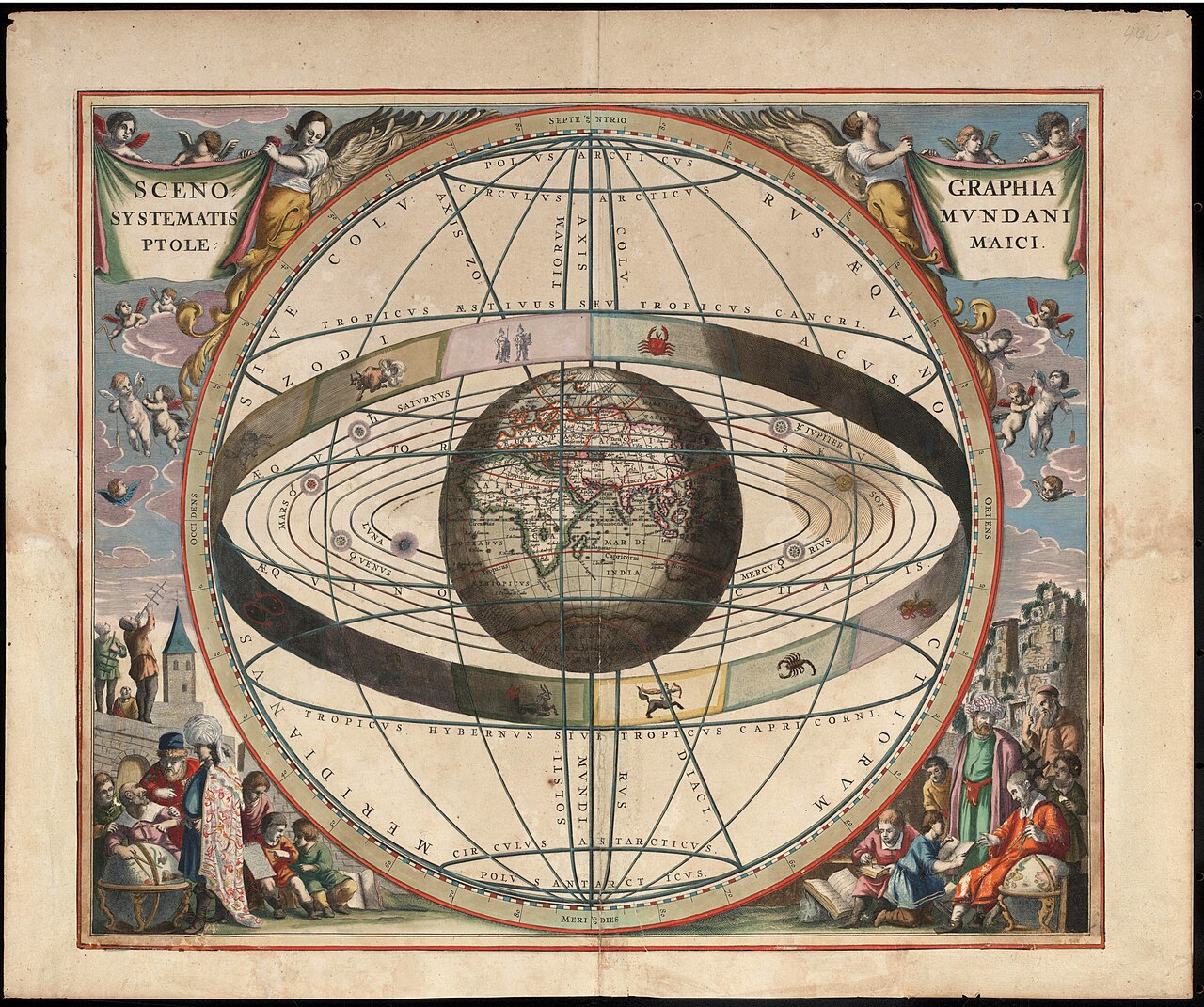 The Ptolemaic celestial chart with the signs of the zodiac, engraved for Andreas Cellarius's Harmonia Macrocosmica (1660). Public domain.
The sun sign is one ingredient, not the whole recipe
Here is the thing that the horoscope widget at the bottom of your favorite news site never makes clear. Your "sign," the Aries or Libra or Pisces you tell people at parties, refers to one thing only: where the Sun sat along the zodiac on the day you were born. That is it. One placement.
But the sky at the moment of your birth held the Moon, Mercury, Venus, Mars, Jupiter, Saturn, and the rest, each sitting in its own sign, each occupying a different slice of the sky called a house. A birth chart is a snapshot of that entire arrangement. The Sun is the headline, but a headline is not the article.
So when someone says "I don't act like my zodiac sign," what they are very often describing is a chart where the loudest voices are not the Sun at all. The Sun is in the room. It is just not the one talking the most.
Saying you are "a Scorpio" is a bit like describing an entire orchestra by naming only the first violin. Accurate, but it leaves out the brass section that is actually carrying the melody.
The three placements that usually explain the mismatch
When the felt gap is large, three placements tend to be responsible. Astrologers call this trio your "big three," and learning yours explains more about the sun-sign mismatch than anything else. You can read a fuller breakdown in our guide to the big three in astrology, but here is the short version.
Your Moon: the inner you that does not show up on a resume
The Moon is associated with your emotional interior, your instincts, what soothes you and what unsettles you, and the self you are when no one is performing for anyone. If your Sun is in confident, fiery Leo but your Moon is in cautious, private Virgo, you may genuinely feel nothing like the bold Leo archetype, because the part of you that runs your inner weather is Virgo-flavored.
This is the most common source of "that does not sound like me." Sun-sign writing describes your outward, expressive drive. The Moon describes how you actually feel from the inside. The two can pull in noticeably different directions, and tradition holds that the Moon often wins the felt experience. Our explainer on what your Moon sign means goes deeper here.
Your Rising sign: the version of you the world meets first
Your rising sign, or ascendant, is the zodiac sign that was climbing over the eastern horizon at the exact minute and place you were born. It changes roughly every two hours, which is why birth time matters so much. The rising sign is associated with your demeanor, your instinctive first impression, and the "feel" people get from you before they know you.
Plenty of people relate far more to their rising sign than their Sun, because the rising sign is the costume you wear into a room. A reserved Capricorn Sun with a sparkling Gemini rising can read as chatty and quick to everyone they meet, which makes the "serious Capricorn" label feel flat-out false. If this is new to you, our piece on what a rising sign is is the place to start.
A dominant planet or a stellium pulling the center of gravity
Sometimes the mismatch comes from sheer concentration. If you were born with several planets crowded into one sign or one house, astrologers call that a stellium, and it can dominate a chart the way one heavy instrument dominates a mix. A person with the Sun in airy Aquarius but four planets stacked in watery Cancer will often feel far more tender and home-oriented than the cool, detached Aquarius blurb suggests.
The pattern across all three cases is the same. The Sun is real, but it is being outweighed. And the direction of the pull is information about you specifically.
The smaller voices: Mercury, Venus, and Mars
The big three carry most of the explanation, but they are not the whole cast. Three of the faster-moving planets quietly shape the traits people most often feel they "don't match."
Mercury is associated with how you think and talk: whether your mind runs fast and scattered or slow and methodical, and whether you process out loud or in private. A Taurus who feels mentally restless rather than placid may simply have Mercury in a quicker, more curious sign than the Sun.
Venus is associated with how you relate, what you find beautiful, and how you show affection. A fiery Aries Sun with Venus in gentle, accommodating Pisces can be far softer in love than the blunt Aries reputation implies, which is exactly the kind of contradiction that makes a sun-sign label feel wrong.
Mars is associated with drive, anger, and how you go after what you want. A peaceable Libra Sun with an assertive Mars can have a temper and a competitive streak that the "diplomatic Libra" sketch never mentions.
None of these override the big three, but they often explain the more specific "but I'm also kind of the opposite" feelings that a single sun-sign description cannot hold.
Why your horoscope feels generic, and what that actually proves
Now for the honest part, the part that most astrology content quietly hopes you never think about.
There is a well-documented reason sun-sign horoscopes can feel eerily accurate and totally hollow at the same time. In 1948, psychologist Bertram Forer gave 39 of his students what he said was a personalized personality profile based on a test they had taken. He asked each of them to rate how accurately it described them, on a scale of 0 to 5. The average rating was 4.26. Then he revealed the catch: every single student had received the exact same profile, assembled from vague, flattering, broadly true statements he had pulled from a newsstand astrology book. He published the result in 1949 as "The Fallacy of Personal Validation."
This is the Forer effect, also called the Barnum effect. We are wired to read general statements ("you have a great deal of unused capacity," or a line about being sometimes outgoing and sometimes reserved) as deeply personal, because they are written to fit almost everyone.
Here is the reframe that matters.
A generic sun-sign horoscope feels personal for the same reason it is not. It was written to fit all one-twelfth of humanity who share your Sun. The parts of you that a Barnum statement can never capture are exactly the parts that are genuinely, specifically yours.
That is not an argument against astrology. It is an argument against the generic version of it. The Moon in a precise degree, the rising sign set by your exact birth minute, the houses your planets fall into, the angles they make to each other: none of that is in a one-size-fits-twelve blurb. It cannot be. Those specifics are computed from your exact birth date, time, and place, and they are different for someone born the same day an hour later in the next town over.
So if you have always felt that horoscopes are "kind of true but not really about me," your instinct was correct. The kind-of-true part is the Barnum layer. The about-me part was never in the blurb to begin with.
How to actually think about your own mismatch
You do not need a full reading to start. Try this honestly, on yourself.
-
Name the gap in plain words. Not "I'm not like a Taurus." Instead: "Taurus is supposed to be steady and slow to change, but I feel restless and I get bored fast." Specificity turns a complaint into a clue.
-
Ask which placement that clue belongs to. Restlessness and a fast inner tempo are often associated with Moon, Mercury, or rising placements in the more mobile, airy, or fiery signs. A craving for security that contradicts a "free spirit" Sun often points toward a watery or earthy Moon. You are not diagnosing yourself. You are forming a hypothesis.
-
Look for the pattern, not the single trait. One mismatch is a quirk. Three mismatches all pointing the same direction (toward emotional caution, say, or toward intensity, or toward sociability) usually mean a real placement is carrying weight your Sun is not.
-
Hold it as a question, not a verdict. The most useful astrology is not "this is what you are." It is "here is a frame, does it help you notice something true?" If a frame helps you describe your own inner life more precisely, it has done its job, whether or not a single star moved.
Walk one example all the way through. Say you are a Sagittarius, the sign of restless adventure, but in real life you are a homebody who reschedules plans to stay in, hates surprises, and feels best with a quiet routine. Named plainly, your gap is "Sagittarius is supposed to be footloose, but I crave home and predictability." That craving for security and comfort is a classic Moon and fourth-house theme, often associated with watery or earthy placements. One such trait could be a fluke. Pair it with a second (you also dislike risk) and a third (you need a lot of downtime to recharge), and the pattern stops looking like a contradiction and starts looking like a strong, home-oriented Moon sitting underneath an adventurous Sun. You have not proven anything. You have built a good, testable hypothesis about yourself, which is exactly what the chart is for.
This is the genuinely useful skill, and it is yours to keep regardless of what you do next: treat the mismatch as data. Astrology, at its most honest, is a symbolic language for self-reflection, not a fortune-telling machine. The "wrongness" you felt was the language inviting you to look closer.
The one thing this article cannot do
Everything above tells you what signs tend to feel like and where mismatches usually come from. It is true in the general. But it cannot tell you what your Moon, your rising, and your specific planetary placements actually are, because those depend on details only you have: your exact birth time and the city you were born in.
That is the line between an article and a chart. This piece can hand you the map legend. Only your real chart has your coordinates on it.
If you want to see which placement is actually outvoting your Sun, you can run your real birth chart for free using your exact birth date, time, and place. It computes your Moon, rising, houses, and aspects rather than guessing from your Sun alone, which is the whole point: it shows you the specifics a sun-sign horoscope structurally cannot. No belief required to find it interesting. For many people who do not relate to their sign, the explanation tends to sit in the Moon or the rising sign, waiting in the first two placements you check.
The next time you catch yourself saying "I'm a [sign], but I'm nothing like that," try finishing the sentence differently. Not "so astrology is fake," but "so what in my chart is louder than my Sun?" That small shift turns a dismissal into a genuinely good question about yourself, and questions like that are where any honest self-knowledge starts, whether it arrives by way of the stars or anything else.
FAQ
Q: Why don't I relate to my zodiac sign at all? A: Your zodiac sign refers only to where the Sun was at your birth, which is one placement out of many. In astrological tradition, a strong Moon, rising sign, or a cluster of planets in another sign can outweigh the Sun in how you actually feel and come across. The mismatch usually points to one of those louder placements rather than meaning astrology is "wrong" for you.
Q: What is the difference between my sun sign and my moon sign? A: The Sun sign is associated with your core outward identity and conscious drive, while the Moon sign is associated with your emotional interior, instincts, and the self you are in private. When the two are in very different signs, you can feel quite unlike your Sun's reputation. The Moon often carries more of the felt, internal experience, which is why so many people relate to it more.
Q: Does my birth time really change my chart that much? A: Yes, especially for the rising sign, which shifts to a new zodiac sign roughly every two hours and also sets where each planet lands among the houses. Two people born on the same day but a couple of hours apart can have noticeably different charts. This is why generic sun-sign horoscopes, which ignore your time and place entirely, can feel off.
Q: If horoscopes use the Barnum effect, is astrology just fake? A: The Barnum effect explains why generic sun-sign writing feels personal: it is broad enough to fit almost anyone, as Forer's 1948 experiment (published in 1949) demonstrated. That is a fair critique of one-size-fits-all horoscopes, not of a full birth chart computed from your exact details. Astrology is best treated as a symbolic framework for self-reflection rather than proven science or prediction, and the specific, personalized layer is the part a Barnum statement cannot reach.
Q: How do I find out which placement is overriding my sun sign? A: Start by naming your mismatch in specific terms, then notice whether several traits point the same direction, which often signals a dominant Moon, rising, or planetary cluster. To see the actual placements, you need a chart computed from your exact birth date, time, and city. Running your real chart shows your Moon, rising, and houses directly instead of guessing from your Sun.
Arpit Tripathi
Founder, Destivio · ex-Google · ex-AWS
Arpit built Destivio to bring the depth of Vedic astrology into the age of AI — making precise, personalized birth chart readings accessible to everyone.
LinkedIn →Continue reading
Your Big Three, Decoded
Big three astrology meaning goes beyond a glossary. Learn to read the tension between your sun, m…
Read →
Red Flags Aren't in Your Sun Sign
Zodiac red flags green flags aren't in your sun sign. Your Venus sign shows how you love, your Ma…
Read →Rising Sign Personality: Your Jungian Social Mask
Cancer rising sign personality and beyond: how your rising sign becomes a Jungian social mask tha…
Read →Explore your chart
Curious what your birth chart reveals about you?
Get a personalized reading based on your birth energy — free to start.
Discover your birth energy →